HEALTHCLUES · VERIFIED HANDBOOK
Blood Sugar & Everyday Pairings: What Food Combinations Teach Us
Four familiar food pairings, the compounds and nutrients inside them, and what human clinical trials actually tested on postprandial glucose curves.
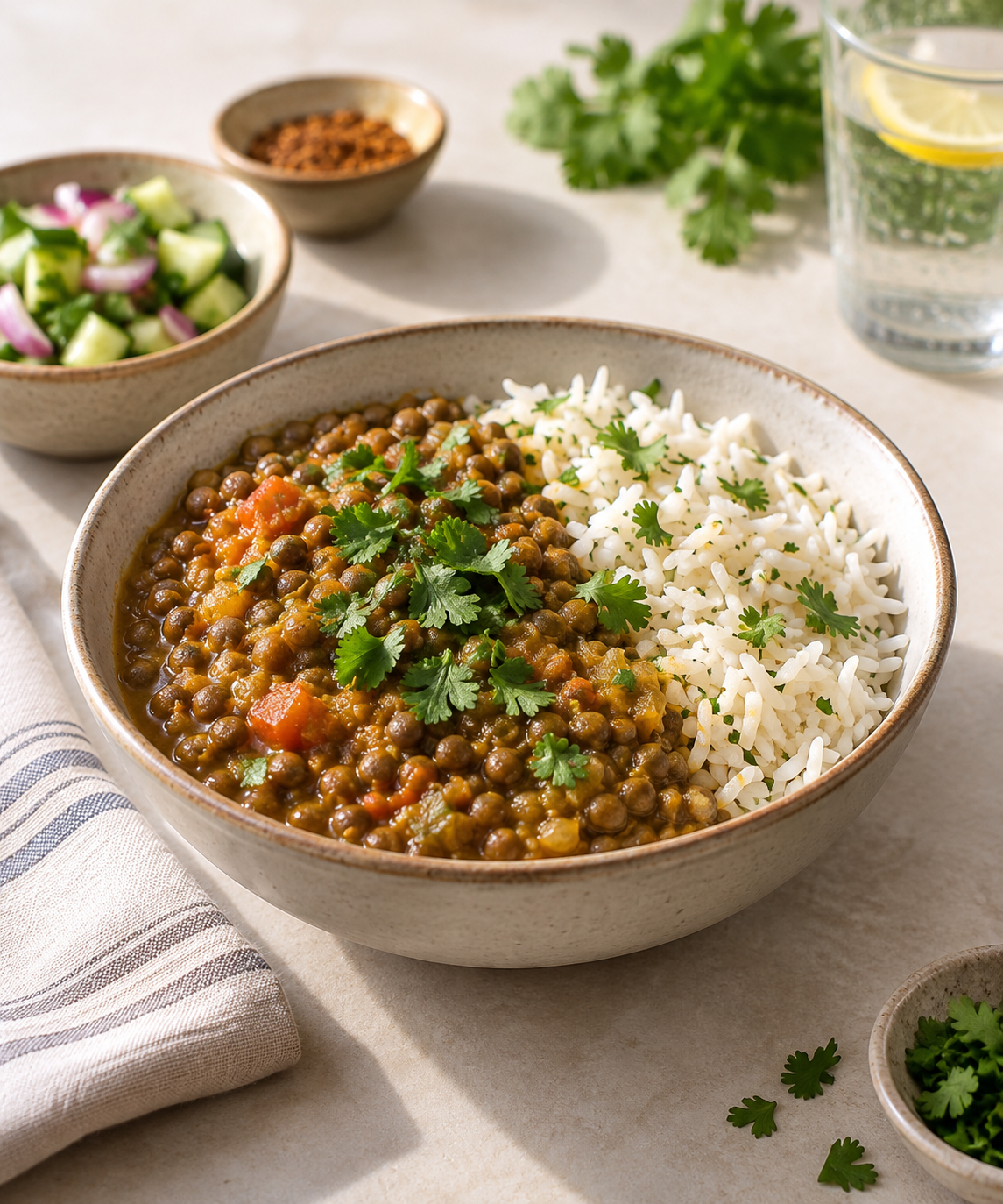
Changing the proportions and fibre-protein matrix within a meal can flatten the post-meal glucose curve. The insight is about the whole plate, not turning ordinary foods into treatments.
How to read blood-sugar food research
Blood sugar after eating depends on more than one ingredient. The amount and type of carbohydrate, fibre, protein, food structure and the rest of the meal all shape the response.
One important habit runs through every clinical study: evidence about a concentrated compound is not automatically evidence about the whole food, and evidence about one ingredient is not automatically evidence about the pairing.
The 4 pairings tested in human trials
1. Lentils + Rice: Replacing 50% of available rice carbohydrates with lentils significantly reduced the area under the blood glucose curve.
2. Oats + Berries: Viscous oat beta-glucan slows glucose digestion, but clinical certainty varies with the exact form and dose.
3. Onion + Honey (Myth-check): While onions contain quercetin, honey contributes free glucose and fructose. There is no human evidence showing onions offset honey's sugar load.
4. Beans + Toast: Adding pulses introduces a slow-digesting protein and fibre structure that alters the carbohydrate context of starchy bread.
Practical takeaway for your plate
Do not look for magical food pairs to cure diabetes or cancel out excess calories. Instead, use food composition to your advantage: adding legumes, whole oats, or protein to a starchy meal reliably dampens post-meal glucose spikes.
Download the Complete Blood Sugar & Food Pairings Handbook
Includes all 4 food combinations, postprandial glucose curves, human crossover trials, and 15 PubMed citations in an 11-page printable PDF.
✓ 100% free. Instant download link.