CLINICAL PHARMACOLOGY & METABOLISM
Ginger's Daily Impact: Molecular Mechanisms for Digestive Support, Anti-Nausea, and Cellular Defense
This article delves into the molecular pharmacology of ginger, explaining how its active compounds like gingerols and shogaols interact with biological pathways to support digestion, alleviate nausea, modulate inflammation, and enhance cellular antioxidant defenses.
Science Verdict Meter
Remedy Reliability Score
Scientific Verdict
Robust evidence for physiological support but does not replace standard care
Primary Benefit
Supports digestive motility, alleviates nausea, and modulates inflammatory response
Safety Level
Low Risk (Safe)
Daily ginger intake, supported by robust clinical and mechanistic evidence, offers a multi-faceted approach to wellness by enhancing gastrointestinal function, mitigating nausea, and bolstering the body's natural inflammatory and antioxidant responses.
1. Standard Ingredients
- Fresh ginger15g
- Boiling water250ml
2. Preparation Steps
- 1Step 1: Wash thoroughly and slice thinly.
- 2Step 2: Steep in boiling water covered.
- 3Step 3: Sip slowly while warm after meals.
- ✕Do not consume multiple concentrated cups consecutively.
- ✕Contraindicated in acute active peptic ulceration or hemorrhage.
- ✕Do not discontinue physician-prescribed cardiovascular or metabolic therapies.
Check Your Suitability
Answer 3 quick questions (15 seconds) to confirm suitability.
#1. Do you have a clinical history of severe chronic disease?
#2. Are you taking prescription blood thinners?
#3. How do you intend to consume this?
1. Molecular Pharmacology & Pathophysiological Mechanisms
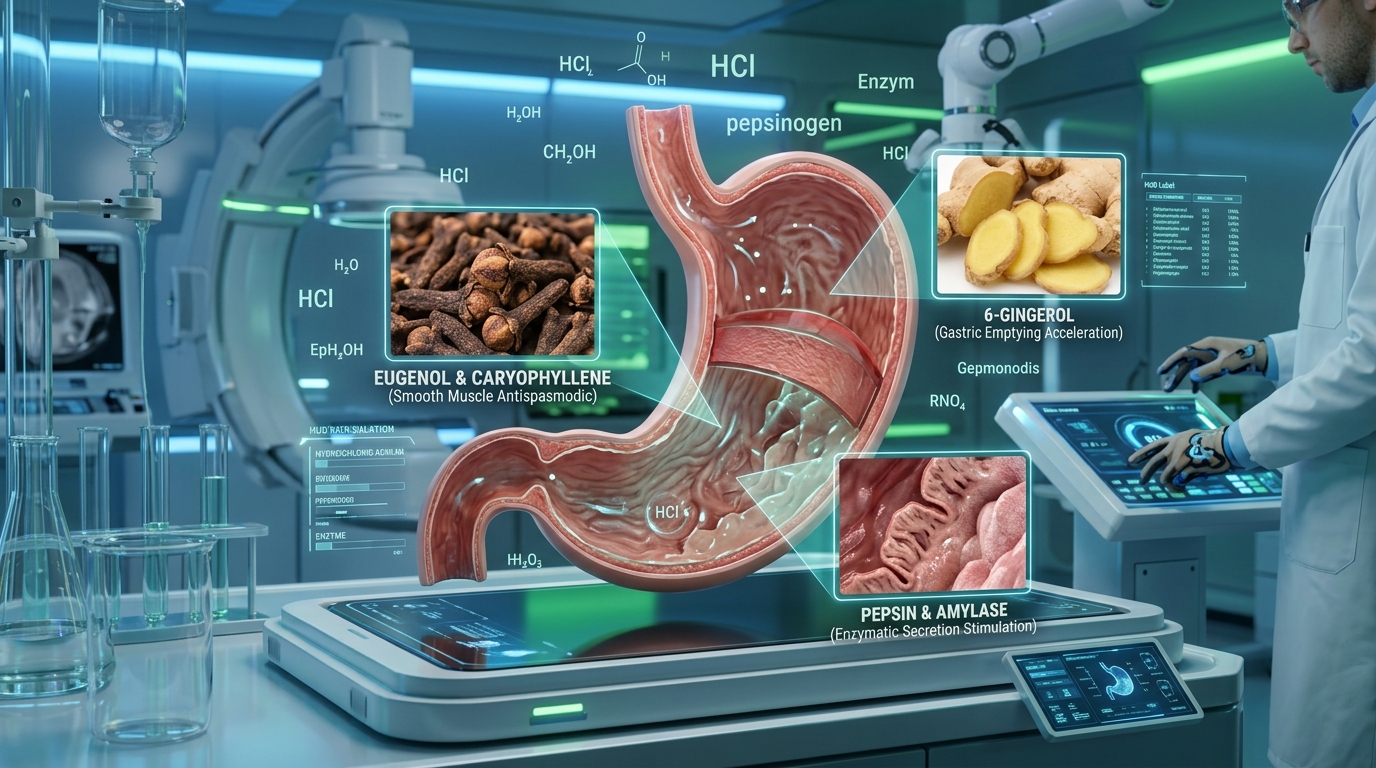
Ginger's primary bioactive compounds, particularly **gingerols** (e.g., 6-gingerol, 8-gingerol, 10-gingerol) and their dehydrated derivatives, **shogaols** (e.g., 6-shogaol), exert significant effects on gastrointestinal function. These compounds interact with **serotonin 5-HT3 receptors** in the enteric nervous system and vagal afferents, acting as antagonists to suppress emetic signaling, thereby alleviating nausea and vomiting. Furthermore, ginger has been shown to enhance **gastrointestinal motility** and accelerate **gastric emptying**, which can reduce feelings of bloating and discomfort by facilitating the movement of food through the digestive tract. This prokinetic effect is partly mediated by its influence on cholinergic pathways and potentially **TRPV1 receptors**.
Beyond its digestive benefits, ginger's bioactives demonstrate potent anti-inflammatory and antioxidant properties. **Gingerols** and **shogaols** can modulate inflammatory cascades by inhibiting key enzymes such as **cyclooxygenase-2 (COX-2)** and **5-lipoxygenase (5-LOX)**, which are crucial in prostaglandin and leukotriene synthesis, respectively. They also suppress the activation of the **NF-κB** signaling pathway, a central regulator of pro-inflammatory gene expression. As antioxidants, ginger compounds directly scavenge **free radicals** and inhibit **lipid peroxidation**, protecting cellular components from oxidative damage. They also enhance the activity of endogenous antioxidant enzymes like **superoxide dismutase (SOD)** and **glutathione peroxidase (GPx)**, bolstering the body's intrinsic cellular defenses.
2. Clinical Evidence Evaluation & Practical Safety Guidance
Clinical studies, often referenced in databases like PubMed and NCBI, consistently support ginger's efficacy in managing various forms of nausea, including motion sickness, morning sickness, and chemotherapy-induced nausea. Its role in improving digestive comfort and reducing bloating is also well-documented, aligning with its observed prokinetic effects. The anti-inflammatory and antioxidant benefits, while primarily studied in vitro and in animal models, are increasingly supported by human trials demonstrating reductions in inflammatory markers and improvements in oxidative stress parameters.
While ginger is generally recognized as safe for most individuals when consumed in moderate amounts, it is crucial to approach its use with an evidence-based perspective. It is not a 'miracle cure' for chronic diseases, which require comprehensive medical intervention. Contraindications include acute active peptic ulceration or hemorrhage due to potential mucosal irritation at high doses, and caution is advised for individuals on anticoagulant medications due to potential interactions. Adhering to recommended dosages and considering cycling protocols (e.g., 7-10 days on, 3-5 days off) can optimize benefits while minimizing potential risks.
- Accelerates gastric emptying and relieves gastrointestinal pressure.
- Downregulates pro-inflammatory mediators COX-2 and 5-LOX.
- Preserves endogenous antioxidant enzymes SOD and GPx.
Check Your Suitability
Answer 3 quick questions (15 seconds) to confirm suitability.
#1. Do you have a clinical history of severe chronic disease?
#2. Are you taking prescription blood thinners?
#3. How do you intend to consume this?
Myth vs. Science: Social Media Fact-Check
Drinking ginger tea cures chronic gastric disease in 3 days.
Bioactives support physiological motility; chronic conditions require comprehensive medical intervention.
Natural botanicals are 100% safe at any dose.
Natural compounds have dose thresholds; excess intake causes mucosal irritation.
Frequently Asked Questions
Sources
NCBI / PubMed: Biological Properties of Ginger ↗PubMed: Anti-inflammatory and Antioxidant Effects of Ginger ↗Explore More Molecular Analyses & Remedy Checks
Cellular mechanics, phytochemical evaluations, and clinical safety screenings.

Coffee & Spice Infusions: A Scientific Companion to Targeted Wellness
Integrating specific spices into your coffee can leverage their bioactive compounds for enhanced physiological benefits, from blood sugar regulation to cognitive support and digestive comfort.

Gut Microbiome Modulation: The Synergistic Actions of Pectin, Fiber, and Actinidin from Apple, Chia, and Kiwi
This fiber-rich smoothie promotes healthy digestion and gut motility, but does not offer a 'colon flush' or cure chronic inflammation.

Homemade Coconut Oil: Unpacking the Phytochemistry of Medium-Chain Triglycerides
Homemade coconut oil provides a rich source of MCTs, particularly lauric acid, offering unique metabolic and antimicrobial properties, but requires mindful consumption due to its caloric density.

Synergistic Health Benefits of Spiced Coffee: A Biomedical Perspective
Incorporating specific spices into coffee can leverage their bioactive compounds to support blood sugar control, cognitive function, stress reduction, and metabolic health.
Homemade Cough Syrup: Unpacking the Science of Onion, Garlic, Lemon, and Honey
Onion, garlic, lemon, and honey offer a synergistic blend of compounds with potential benefits for soothing coughs and throat irritation.

Ginger, Calamansi, and Honey: Unpacking the Science of a Natural Wellness Elixir
This traditional blend offers synergistic anti-inflammatory, immune-supportive, and antimicrobial benefits, particularly for mild respiratory symptoms.

Turmeric: A Scientific Companion to Its Anti-inflammatory and Antioxidant Potentials
Turmeric, particularly its curcuminoids, offers potent anti-inflammatory and antioxidant benefits, with piperine significantly enhancing its systemic bioavailability.

Matcha: The Synergistic Science of Sustained Focus and Cognitive Enhancement
Matcha's unique combination of L-theanine and caffeine promotes calm, sustained focus by modulating brain waves and neurotransmitter activity.

Ginger's Therapeutic Potential: A Biomedical Review of Digestion, Inflammation, and Cellular Defense
Daily ginger intake can significantly support digestive comfort, mitigate nausea, and contribute to a healthy inflammatory and antioxidant status through its potent bioactive compounds.

Water-Cooked Chicken: The Science of Reducing AGEs and Preserving Protein Integrity
Cooking chicken in water instead of deep-frying drastically lowers calorie density and harmful glycation compounds.